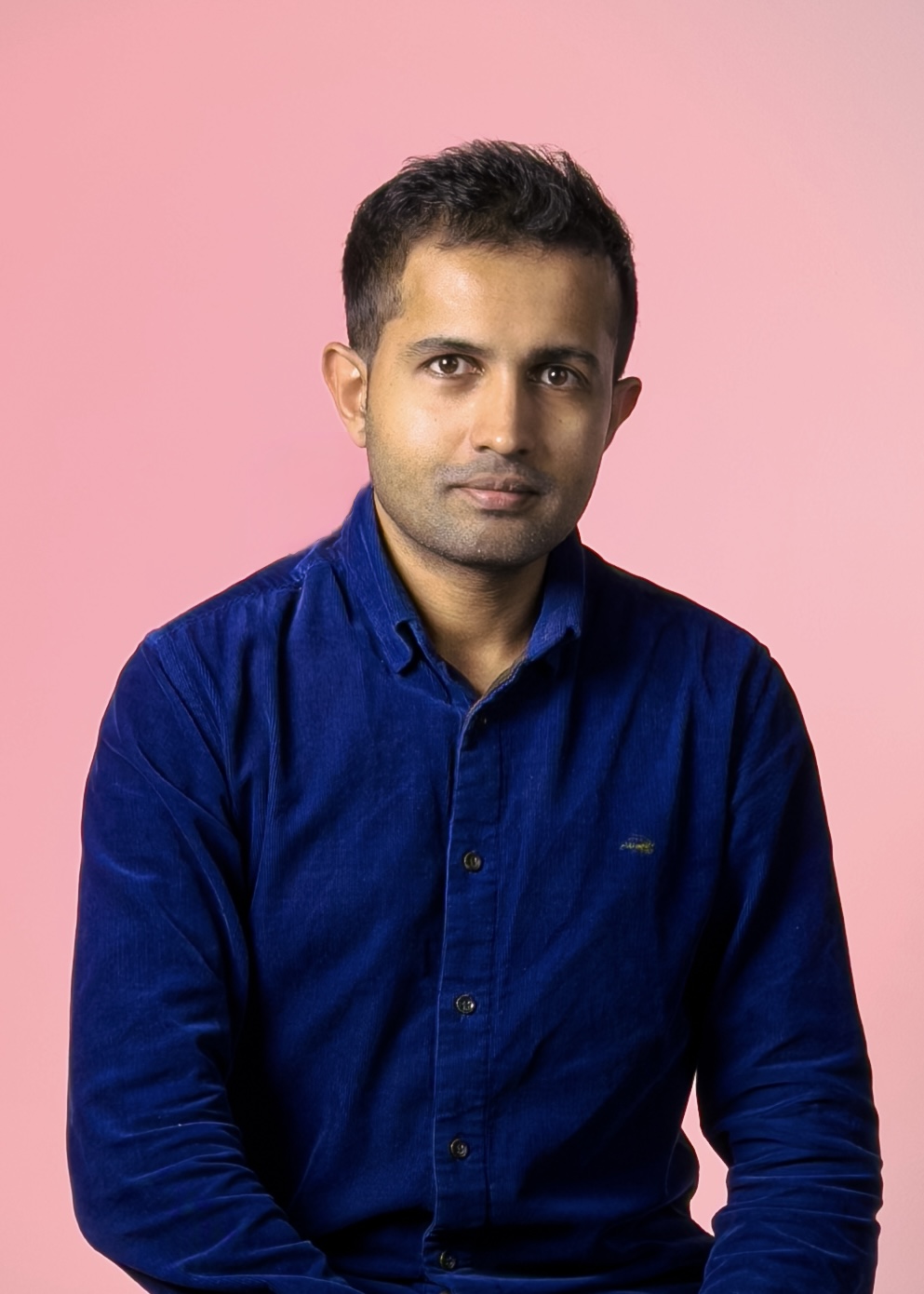
I grew up in Sri Lanka and studied IT at the University of Moratuwa. Even as an undergraduate I was more interested in making things than in talking about them: a runner-up place at Microsoft's Imagine Cup in 2015, a run of hackathons, and NavitaZ VR Labs — an AR/VR start-up I co-founded under the MIT Global Startup Labs programme, building mobile AR apps and VR experiences before most people had heard the terms.
I spent four years at 99X as a technical lead and senior software engineer, learning what it takes to ship software that real customers depend on. I also lectured at the University of Moratuwa, teaching programming, web technologies, human-computer interaction and databases, and led the Software Engineering strand of the university's open learning platform. It grew to more than 150,000 registered learners, many of them far from any campus — and it taught me that teaching at scale is a design problem.
In 2022 I moved to Aotearoa New Zealand for a fully funded PhD at HIT Lab NZ, University of Canterbury. My research asked a question I still find fascinating: how can augmented reality make meaningful use of the real world to connect people who are physically apart? With Sony Interactive Entertainment and Niantic as industry partners, I designed and tested multiplayer AR games across three studies with 128 participants, and published the results at venues including IEEE VR, OzCHI and Elsevier's Entertainment Computing.
Today I'm a Postdoctoral Researcher at HIT Lab NZ and a Senior Lecturer at Yoobee College of Creative Innovation, where I teach in the Master of Business Informatics. There I built YooBees, a learning platform for my classes, and rebuilt my courses as interactive lessons anyone can open. I also founded ICT Campus, an online classroom teaching A/L ICT to Sri Lankan students in Sinhala and English, and wrote The Collaboration Reflex, a book about why our instinct to collaborate is so often the wrong answer to conflict.
The thread through all of it is simple: I like turning research into something people use — a game, a lesson, a product, a talk. If you're working on something like that, I'd love to hear about it.